#HalfBraided #HalfCurly #Protective #Hairstyles
Half-braided, half-curly hairstyles mix neat structure with soft movement, giving you plenty of ways to balance defined braids and free-flowing curls.
The appeal of these styles comes from contrast. Braided sections can create clean lines, interesting parts, or a secure foundation, while the curly portion adds volume and softness. Depending on the installation, the curls may begin behind the crown, through the mid-lengths, or only toward the ends.
When comparing these ideas, consider where you want the braiding to stop, how much loose texture you want, your preferred curl definition, and the total weight of the finished style. A protective hairstyle should also feel comfortable, so neatness should never come at the expense of excessive tension.
Quick List
- Classic Half Braided Half Curly Protective Hairstyle
- Middle Part Cornrow And Curly Protective Hairstyle
- Side Part Half Braided Half Curly Protective Hairstyle
- Feed In Braids With Loose Curls Protective Hairstyle
- Tribal Braids With Curly Lengths Protective Hairstyle
- Stitch Braids With Flowing Curls Protective Hairstyle
- Half Cornrow Half Curly Bob Protective Hairstyle
- Shoulder Length Braids And Curls Protective Hairstyle
- Long Half Braided Half Curly Protective Hairstyle
- Small Braids With Voluminous Curls Protective Hairstyle
- Chunky Braids With Soft Curls Protective Hairstyle
- Face Framing Braids With Curly Back Protective Hairstyle
- Half Up Braided And Curly Protective Hairstyle
- High Ponytail Braids And Curls Protective Hairstyle
- Low Ponytail Braids And Curls Protective Hairstyle
- Braided Crown With Loose Curls Protective Hairstyle
- Beaded Half Braided Half Curly Protective Hairstyle
- Gold Cuffed Braids With Curly Ends Protective Hairstyle
- Layered Braids With Defined Curls Protective Hairstyle
- Voluminous Half Braided Half Curly Protective Hairstyle
1. Classic Half Braided Half Curly Protective Hairstyle

The classic version creates a clear transition between neat braiding and loose curls without making either texture overpower the other. Braids can begin at the scalp and continue through roughly half the visible length before opening into soft, springy curls. Medium sections keep the braided portion defined while allowing enough loose hair to create natural movement around the shoulders and back. Slight differences in curl size make the lower half feel relaxed rather than mechanically uniform. The style can be worn with a center or soft side part depending on the desired shape. Keep the installation comfortably secure and avoid unnecessary extension density if you want the curls to remain light and easy to move.
Why It Works
The distinct braid-to-curl transition gives the hairstyle structure at the top and softness through the lower half.
Wear & Maintenance
Protect the loose texture overnight and detangle curls gently so the braided sections remain neat without encouraging knots below them.
2. Middle Part Cornrow And Curly Protective Hairstyle

A middle part paired with front cornrows creates a balanced framework before the style opens into curls behind the braided section. The center line gives the look clean symmetry, while the free curls soften that precision and add fullness around the sides and back. Cornrows can travel straight back or angle slightly away from the part, depending on how much visual detail you want at the scalp. Medium-density curls usually provide enough volume without completely hiding the braided foundation. This style is particularly effective when the transition sits around the crown rather than too far back, allowing both textures to remain visible from the front. Root tension should feel comfortable, especially along the center part and hairline.
Styling Notes
Keep the cornrow sizes consistent on both sides of the middle part if you want the finished look to remain visually balanced.
Best For
Choose this version when you want visible scalp design in front with most of the softness concentrated behind the crown.
3. Side Part Half Braided Half Curly Protective Hairstyle

A defined side part makes the braided section feel more directional and creates natural asymmetry in the curls. Braids on the fuller side can sweep diagonally before transitioning into loose texture, while the smaller section keeps the opposite side more open. This arrangement works well when you want the curls to fall heavily over one shoulder rather than sitting evenly around the face. Medium braids give enough flexibility for the side sweep without creating excessive bulk at the transition point. A few shorter curls near the front can soften the part and make the style feel less rigid. Map the part before installation so the braids naturally support the intended direction instead of fighting against it.
Why It Works
The side part distributes braid and curl volume unevenly, creating movement without requiring complicated styling after installation.
Pro Tip
Let several curls fall forward on the fuller side to emphasize the diagonal shape rather than placing everything behind the shoulders.
4. Feed In Braids With Loose Curls Protective Hairstyle

Feed-in braids create a smooth, gradual foundation that transitions beautifully into loose curls. The braided section can remain close to the scalp through the front and crown before releasing into flowing texture farther back. Because the braids increase gradually in size, the top looks clean without a bulky starting point. Loose curls provide a softer contrast, especially when they vary slightly in width and direction. Keeping the braided design relatively simple allows the transition to remain the main feature rather than competing with multiple decorative patterns. The amount of added hair should be controlled so the finished look stays comfortable, particularly if the curly section is long or intentionally full.
Styling Notes
Introduce extension hair gradually through the feed-in sections and keep the point where the curls begin consistent enough to look intentional.
Wear & Maintenance
Refresh the loose portion gently while leaving the scalp braids largely undisturbed between regular maintenance.
5. Tribal Braids With Curly Lengths Protective Hairstyle

Tribal-inspired braid patterns can make the upper half of a braided-and-curly style especially decorative. Carefully arranged parts, directional braids, and selected face-framing sections create detail near the scalp before the hairstyle transitions into long loose curls. Because the braided pattern already draws attention, the curly lengths can stay soft and relatively simple. Avoid adding too many competing accessories or textures unless a more elaborate finish is specifically desired. The strongest version maintains a clear visual connection between the patterned braids and the flowing lower section. Comfortable section sizing is also important, since detailed parting should not require excessive tension around the hairline or temples to look polished.
Why It Works
The contrast between geometric braid placement and soft curls gives the style both definition and movement.
Styling Notes
Choose one dominant braid pattern and let the curl texture provide the softer counterpoint rather than combining several unrelated designs.
6. Stitch Braids With Flowing Curls Protective Hairstyle

Stitch braids create crisp, repeated sections across the scalp, giving the top of this style a highly defined finish. Once the braids reach the crown or upper back, they can blend into flowing curls that add a completely different texture below. The clean stitch pattern looks especially striking when paired with medium-to-large curls rather than extremely tight ringlets, because the difference between structured and loose areas remains obvious. A few curly strands near the temples can soften the front if you prefer less severity. Since stitch detailing places visual emphasis on the root area, straight parting and even spacing matter more than adding extra accessories to the finished look.
Best For
This option suits anyone who enjoys precise scalp detail but still wants plenty of soft movement through the rest of the hairstyle.
Wear & Maintenance
Avoid repeatedly pulling the curly section into tight styles that place extra stress on the stitched braided foundation.
7. Half Cornrow Half Curly Bob Protective Hairstyle

A bob-length version keeps the half-braided, half-curly concept compact and easy to see from every angle. Cornrows can cover the front or upper portion of the head before releasing into curls that finish near the jaw, shoulders, or collarbone. Because there is less length, each curl contributes strongly to the silhouette, so moderate density is usually enough to create fullness. Layering a few pieces around the face prevents the perimeter from looking too blunt. The shorter length can also make the transition between braids and curls especially noticeable, which is ideal if you want both textures to receive equal attention. Keep the loose ends soft rather than overly packed for better movement.
Why It Works
The compact shape places the braided foundation and curly perimeter within the same visual frame, so neither detail gets lost.
Pro Tip
Use slightly staggered curl lengths near the front to give the bob a softer, more natural outline.
8. Shoulder Length Braids And Curls Protective Hairstyle

Shoulder length offers a practical middle ground between a short bob and long cascading curls. Braids can extend through the upper half before opening into curls that rest around the shoulders, creating a balanced silhouette with visible texture from the front and back. Medium braid size works particularly well because it gives enough structure without overcrowding the shorter length. The curls can remain defined for a polished look or be lightly separated for extra width. Since the loose section frequently touches clothing, friction may affect curl definition more quickly than it would on hair hanging freely down the back. Gentle handling helps keep the lower portion from becoming unnecessarily tangled.
Best For
Choose this length if you want clear braid-and-curl contrast without the extra weight or upkeep of very long extensions.
Wear & Maintenance
Protect the curls from rough collars and scarves when practical, and reshape individual pieces with your fingers instead of brushing through them.
9. Long Half Braided Half Curly Protective Hairstyle

Long lengths make the curly half of the style especially dramatic while giving the braided portion enough room to transition gradually. Braids may continue from the roots through the upper or middle lengths, then release into curls that fall toward the waist. Scattered curly pieces can also begin higher for a softer blend rather than one sharp transition line. Because long installations can become heavy, braid density and extension amount deserve careful consideration. Medium sections often provide a strong balance between movement and structure. The curls should look generous but not so dense that they hide every braid. Keeping a few braided lengths visible through the loose texture maintains the signature half-and-half effect.
Styling Notes
Plan the braid-to-curl ratio before installation so the curls do not unintentionally dominate the entire lower half.
Wear & Maintenance
Loosely gather long lengths during sleep and protect the curly portion from repeated friction to reduce tangling.
10. Small Braids With Voluminous Curls Protective Hairstyle

Fine braids create intricate detail across the top and upper lengths, while voluminous curls make the bottom half feel dramatically fuller. The contrast works because the small braided sections look delicate next to larger, softer curls. Rather than releasing every braid at exactly the same point, slightly staggered transitions can make the texture change feel more organic. Smaller braids generally require more installation time, so the overall density should be planned carefully for comfort. The curled section can be gently separated to increase volume without brushing it into excessive frizz. This style is particularly effective when you want the upper half to remain visually light while the lower half becomes the main source of width.
Why It Works
Fine braids provide detailed structure while the loose curls create a broader silhouette, giving each half a distinct visual role.
Pro Tip
Build curl volume gradually so the loose portion stays full without completely hiding the small braids beneath it.
11. Chunky Braids With Soft Curls Protective Hairstyle

Chunky braids make the structured half of the hairstyle bold and easy to see, even when paired with generous curls. Larger sections can travel from the scalp through part of the length before opening into wide, soft spirals. Because each braid already carries substantial visual weight, fewer sections may be needed to create a complete look. The curly portion should have enough body to balance those thicker braids without becoming excessively dense. This combination works particularly well with mid-back or shoulder lengths, where individual braids and curls remain easy to distinguish. Avoid overloading each section with extension hair, since large braids can become unnecessarily heavy even when the total number of braids is lower.
Best For
Choose chunky sections if you want the braided half to remain a strong feature rather than blending quietly into the curls.
Styling Notes
Keep the front braids slightly slimmer when needed so they fall comfortably around the hairline and face.
12. Face Framing Braids With Curly Back Protective Hairstyle

This variation concentrates most of the visible braiding around the front and sides while allowing a larger mass of curls to fill the back. Two or more face-framing braids can hang freely or connect into the braided crown, creating clean lines beside the cheeks. Behind them, loose curls provide fullness without making the front feel crowded. The balance works best when the transition from braids to curls remains smooth around the temples and crown rather than creating an abrupt textural divide. A center part gives the framing braids symmetry, while a side part creates a more relaxed effect. Keep front sections lightweight so they move naturally and do not place unnecessary pressure near the hairline.
Why It Works
The braids give the face a defined frame while the curls supply volume where it can move freely through the back and shoulders.
Best For
This style suits anyone who wants a clearly braided front without covering most of the head in individual braids.
13. Half Up Braided And Curly Protective Hairstyle

A half-up arrangement adds height while preserving enough loose texture to showcase the half-braided, half-curly design. Braided sections from the top can be gathered into a small ponytail or relaxed bun, while curls remain free around the sides and back. Leaving a few braids or curled strands near the face keeps the style softer and prevents the top section from feeling too formal. The gathered portion should stay proportionate to the amount of loose hair below it; an oversized bun can easily overwhelm the curls. Secure the style comfortably rather than pulling tightly at the root area. This is also an easy way to change the silhouette of an existing installation without completely restyling it.
Styling Notes
Begin with a smaller top section and add braids gradually until the height and balance look right.
Wear & Maintenance
Use a braid-friendly tie that distributes pressure rather than a narrow elastic that grips one small area.
14. High Ponytail Braids And Curls Protective Hairstyle

A high ponytail gathers the braided sections toward the crown while allowing the curly lengths to cascade behind them. The elevated shape makes the braids near the scalp easy to see and gives the curls extra bounce as they fall from a higher point. A few loose curled pieces around the temples can soften the front and keep the style playful. This works particularly well with medium or long lengths, although very dense installations may feel heavy when lifted. Rather than forcing every braid into one tight bundle, use a secure but comfortable wrap that distributes the weight. The final ponytail should maintain visible braided strands among the curls so the two-texture concept remains clear.
Why It Works
Lifting the hair changes the direction of both textures, revealing the braided base while turning the curls into a flowing focal point.
Pro Tip
If the ponytail begins to feel heavy at the crown, lower or loosen it rather than increasing tension to hold it in place.
15. Low Ponytail Braids And Curls Protective Hairstyle

A low ponytail offers a calmer alternative that keeps the braids controlled while preserving softness through the ends. The braided upper section can lie neatly toward the nape before the curly lengths gather into a loose ponytail. Leaving a few face-framing pieces outside the tie prevents the look from becoming too sleek and highlights the contrast between structured braids and free curls. Because the ponytail sits lower, it can often be secured with less tension than an elevated style. A single braid wrapped around the base adds a polished finishing touch without introducing extra accessories. Keep enough curl volume outside the central bundle so the loose texture remains visible rather than compressed.
Best For
This version works well for everyday wear, work, dinners, or occasions when you want the hairstyle gathered without creating significant height.
Wear & Maintenance
Release the ponytail before sleeping and protect the curls separately so they do not remain compressed around the fastening point.
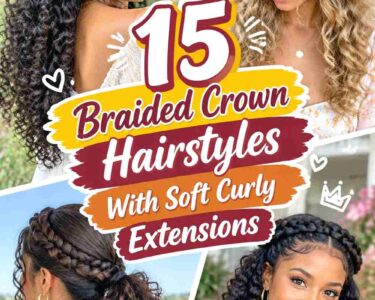
16. Braided Crown With Loose Curls Protective Hairstyle

A braided crown places most of the structural detail around the top of the head while allowing curls to flow freely below. Braids can travel around the front or sides in a curved pattern, creating a defined frame before blending into the loose section at the back. The curls may begin near the crown for fullness or slightly lower for a cleaner distinction between textures. This style works particularly well when the crown braid remains the main decorative feature, so extra accessories are optional rather than necessary. A few wispy curls around the temples can soften the outline. Ensure the crown sits comfortably and follows the natural head shape instead of relying on excessive tension.
Why It Works
The curved braided placement creates a built-in focal point while the loose curls keep the overall style soft and wearable.
Styling Notes
Keep the crown braid proportionate to the curl volume so it remains visible without dominating the entire silhouette.
17. Beaded Half Braided Half Curly Protective Hairstyle

Beads add small points of detail to the braided half while leaving the loose curls relatively untouched. The most balanced approach is to decorate selected braids near the face, crown, or transition area rather than covering every section. Clear, wood-toned, metallic, or neutral beads can all work depending on the desired finish. Keep them on secure braided portions where they are less likely to catch repeatedly in the curls. Since the style already combines two textures, a restrained accessory pattern prevents the result from becoming visually crowded. Lightweight pieces also preserve movement and reduce unnecessary weight. The curls can remain soft and simple, allowing the beads to provide the extra detail.
Styling Notes
Vary bead placement slightly instead of arranging every accessory at exactly the same height.
Wear & Maintenance
Check beads periodically to make sure they remain secure and are not snagging the neighboring loose sections.
18. Gold Cuffed Braids With Curly Ends Protective Hairstyle

Gold cuffs bring a warm metallic accent to the braided portion while the curly ends provide softness below. A handful of cuffs can be placed on front braids, along the sides, or close to the transition into curls. Because metallic pieces are visually noticeable, only a few are needed to make the hairstyle feel finished. Keep the cuffs securely positioned around the braid without squeezing or bending the section. The curly half looks especially balanced when it remains free of heavy ornamentation, allowing the spirals to move naturally. This combination can work at several lengths, from shoulder-grazing to long, as long as the total accessory weight remains light and comfortable.
Why It Works
The cuffs emphasize the structured braid texture while the loose curls keep the lower portion soft, creating a clear contrast between polished and relaxed details.
Pro Tip
Concentrate the metallic accents in one or two areas instead of scattering them evenly across every visible braid.
19. Layered Braids With Defined Curls Protective Hairstyle

Layering gives the curly half multiple levels of movement instead of allowing every loose piece to finish at the same point. Shorter curls can sit around the cheekbones or shoulders, while longer sections continue through the back. Braids feed naturally into those varied lengths, creating a gradual silhouette rather than a blunt lower edge. Defined spirals make the layers easier to see and prevent the curly portion from becoming one large mass of volume. Planning the lengths before installation is important so the shorter pieces look intentional. This style is especially useful when you want fullness around the face without adding the same amount of volume through the entire back of the hairstyle.
Styling Notes
Keep layer changes gradual and use the shortest pieces mainly around the face and outer sections for natural-looking movement.
Best For
Choose this variation if curl definition and visible shape are more important to you than an extra-fluffy finish.
20. Voluminous Half Braided Half Curly Protective Hairstyle

The voluminous version combines a visible braided foundation with generous loose curls that create width through the sides and back. Medium-small braids usually work well because they provide enough structure to peek through the larger curly mass without making the top overly bulky. Curls can begin at slightly different heights to distribute fullness naturally, while a few shorter pieces around the face help shape the silhouette. Volume should come primarily from curl density and gentle separation rather than excessive extension weight at the roots. Finger fluffing can restore the shape when the curls settle, but repeated brushing may create tangling. The finished style should feel full and dimensional while remaining comfortable enough for regular wear.
Why It Works
The braids keep the upper shape organized while the curls expand outward, creating fullness without losing visible structure.
Wear & Maintenance
Protect the loose section without compressing it tightly overnight, then gently lift and separate curls in the morning to restore volume.
How to Choose the Right Look
Start with where you want the braid-to-curl transition to happen. If you enjoy visible scalp detail, cornrows, feed-in braids, stitch braids, and braided crowns keep the structured portion concentrated near the top. If you prefer more braided length, choose individual braids that transition into curls farther down.
Next, compare curl density. Defined spirals create a neater finish, while fluffy and voluminous curls produce a wider silhouette. Shoulder-length versions can feel lighter and keep both textures easy to see, whereas long styles create more dramatic movement but may require greater attention to weight and tangling.
Parting also matters. A middle part gives balance, while a side part creates directional volume. For styling flexibility, half-up and ponytail versions offer easy changes without replacing the installation.
Finally, prioritize comfort. A protective style can reduce daily manipulation, but braid size, root tension, added hair, hold, and total weight should all feel manageable. Choose a version that works with your desired maintenance level instead of focusing on appearance alone.
Final Thoughts
Half-braided half-curly protective hairstyles offer plenty of room to adjust structure, softness, volume, and length. Clean cornrows can create a detailed foundation, individual braids can extend the structured section, and loose curls can range from defined spirals to full, fluffy texture. Narrow your favorites by considering comfort, braid placement, curl maintenance, and the amount of volume you actually enjoy wearing.
FAQs
1. What is a half-braided half-curly hairstyle?
It combines a clearly braided section with loose curly hair in the same style. The curls may begin near the crown, through the lengths, or closer to the ends.
2. Can half-braided half-curly styles be protective?
They can function as lower-manipulation protective styles when installed and maintained appropriately, but they should not rely on excessive root tension or unnecessary extension weight.
3. How do I keep the curly portion from tangling?
Protect the curls during sleep, avoid rough brushing, separate tangles gently with your fingers, and minimize unnecessary handling of the loose sections.
4. Are short or long half-braided styles easier to maintain?
Shorter styles generally involve less loose length to manage, while long curls can require more nighttime protection and careful detangling. Maintenance also depends on curl density and texture.
5. Can I restyle half-braided half-curly hair?
Yes. Depending on the installation, you can try half-up looks, low ponytails, higher ponytails, side sweeps, or accessories as long as the restyling remains comfortable and does not pull excessively at the roots.
Save your favorite half-braided half-curly looks, share the styles that inspire you, and explore different braid patterns, curl finishes, and lengths for your next hairstyle.
Protect your hair while you sleep with the YANIBEST Silk Bonnet. This double-layer satin bonnet reduces friction and prevents frizz, keeping your natural curls looking gorgeous every morning. The adjustable design ensures it stays on all night without slipping off!